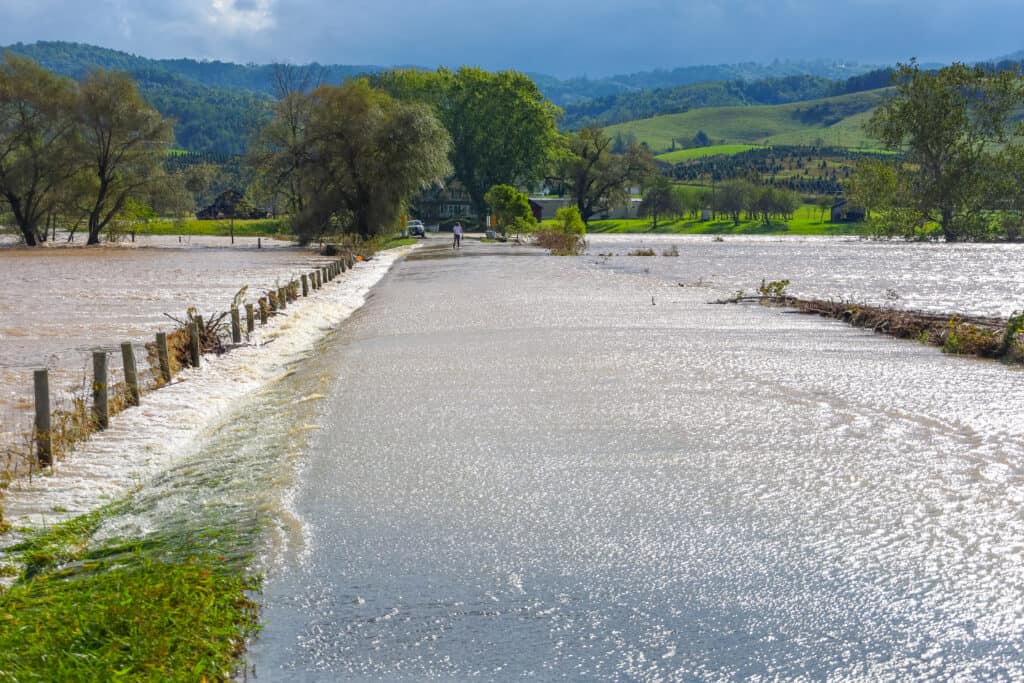

Do I Need Flood Insurance?
Flood insurance is one of the most misunderstood types of coverage. Many property owners assume it only applies to homes near water, or that homeowners insurance already covers flooding. In reality, flood risk and flood insurance rules are far more nuanced.
The short answer is: sometimes flood insurance is required, and often it is strongly recommended.
When flood insurance is required
Flood insurance is typically required by a lender, not by the government.
If your property has:
- A federally backed mortgage, and
- Is located in a Special Flood Hazard Area (SFHA) on FEMA flood maps
your lender is required to enforce flood insurance as a condition of the loan.
Important clarification: FEMA does not force homeowners to buy flood insurance. The requirement comes from mortgage lending rules tied to flood risk.
SFHAs are most commonly mapped as Zone A or Zone V, which represent areas with at least a 1 percent annual chance of flooding.
When flood insurance is not required (but still matters)
If your property is located in a moderate- or low-risk zone, such as Zone X, flood insurance is usually not required by a lender.
However, this does not mean flooding cannot happen.
- FEMA data consistently shows that a significant portion of flood claims come from properties outside high-risk zones
- Heavy rainfall, drainage failure, snowmelt, and development changes can all cause flooding far from rivers or coastlines
Flood risk is not binary. It exists on a spectrum, and flood maps do not capture every possible scenario.
Why homeowners insurance is not enough
A standard homeowners or commercial property policy does not cover flood damage.
Flooding is defined in insurance terms as water that:
- Comes from outside the structure, and
- Affects multiple properties or a broad area
Events like storm surge, rising water, surface runoff, and overflow from rivers or drainage systems fall outside homeowners coverage.
This is why flood insurance exists as a separate policy, whether through the NFIP or the private market.
Should you have flood insurance even if it’s optional?
Many property owners choose flood insurance voluntarily because:
- Repairing flood damage can cost tens or hundreds of thousands of dollars
- Disaster assistance is not guaranteed and is often limited
- Flood insurance premiums in low-risk areas are often lower than expected
Flood insurance is ultimately about financial protection, not just compliance.
How to know if flood insurance applies to you
A good starting point is understanding:
- Your property’s mapped flood zone
- Whether your mortgage is federally backed
- Your building’s replacement cost and exposure
From there, coverage options can be compared between NFIP and private flood insurance policies to determine what makes sense for your situation.
Final thoughts
So, do you need flood insurance?
- Yes, if your lender requires it
- Possibly, even if they do not
Flooding is one of the most common and costly natural disasters in the United States, and it is not limited to high-risk zones. Understanding your risk before a flood occurs gives you far more control than reacting afterward.