Fast quotes • Clear coverage options
Flood Insurance in Maine
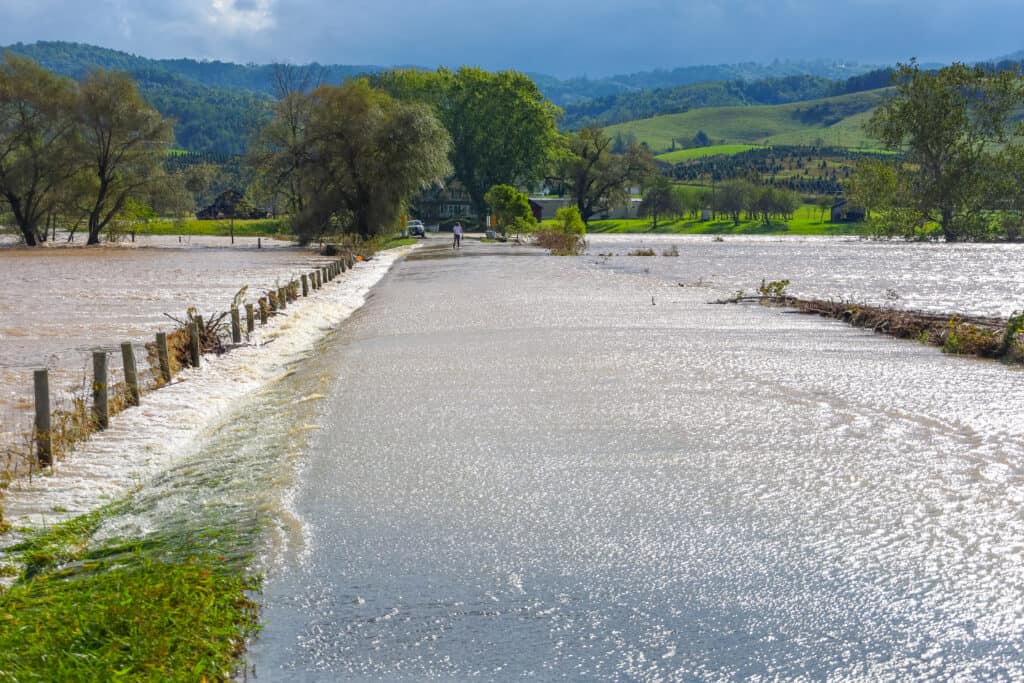
In Maine, flooding is not just a coastal problem. Big rain events can overwhelm culverts and small waterways, rivers can rise quickly, and Nor’easters can drive coastal flooding and storm surge. Get a fast quote and compare NFIP and private flood options with clear, human guidance.
Quote 10+ flood insurers instantly

Flood insurance options in Maine
Compare NFIP and private flood coverage in one place
Maine flood risk is usually a combination of heavy rain, fast-rising rivers, and coastal flooding.
Inland flooding often happens when rain falls on already saturated ground and water moves quickly into streams and rivers. Along the coast, storm surge and higher tides can push water inland during major storms.
Flood insurance typically comes from two places:
- NFIP coverage (the National Flood Insurance Program), and
- Private flood insurance through select carriers.
Many homeowners start with the NFIP because it is widely available in participating communities. Private flood insurance can be a strong option when you want different coverage features, higher limits, or pricing that better matches your property details.
Quick next step: look up your FEMA flood zone by address, then get a quote so you can compare coverage and cost side by side.
No spam. No pressure. Just clear coverage choices.
Get My QuoteWhy You Need Flood Insurance in Maine
Maine flooding can include river flooding, flash flooding, and coastal flooding depending on storm type and location.
Maine Emergency Management reminds residents to check flood insurance because most homeowners insurance does not cover floods.
Coastal Maine faces inundation risk from sea level rise and storm surge scenarios, which can increase coastal flood exposure over time.
Maine’s Floodplain Management Program exists to reduce flood risk and support communities and property owners statewide.
Recent severe storms (December 2023 and January 2024) caused significant flood damage, prompting a state flood resources and assistance hub.
Flood insurance is about recovery speed, so one storm does not turn into a long financial setback.
Areas We Cover
Top Cities We Serve in Maine
Explore popular communities across Maine where property owners get fast flood insurance quotes and guidance from Save Flood.
About Maine
Maine has a lot of water in a lot of forms. From thousands of lakes and ponds to miles of coastline and floodplains, it is normal for some communities to deal with high water after big storms.
The good news is you do not have to guess. Maine’s Floodplain Management Program works with communities and property owners to reduce flood risk, and the state has published a flood resources hub tied to recent severe storm impacts so residents can find help and guidance quickly.
If you already have flood insurance, we can still help. Most Maine homeowners are really asking two questions: “Do I have the right coverage?” and “Am I paying a fair rate for my risk?”
Simple process
How to Purchase Flood Insurance in Maine
Getting flood insurance does not have to be complicated. We help you understand your options, compare coverage, and secure protection with clarity and confidence.
Tell us about your property
Share a few details. No paperwork required to get started.
We compare flood insurance options
We shop private markets and NFIP options to find the best fit.
Choose coverage and get protected
Review your options, ask questions, and bind coverage fast.
Why homeowners and businesses choose Save Flood.
We help you replace or complement NFIP coverage with private flood insurance that can be more affordable and flexible.
Flood Insurance FAQs
Quick, clear answers about coverage, cost, and next steps for homeowners and commercial property owners.
How do I obtain private flood insurance?
Private flood insurance is obtained through a placement process rather than a single provider. An insurance agency reviews your property details, such as location, flood exposure, and construction characteristics, and then determines which private carriers may offer coverage.
If the property meets underwriting guidelines, a quote can often be generated quickly. Because private carriers evaluate risk differently than standardized programs, coverage options and pricing can vary. Our guide explains how private flood insurance is obtained and why working with multiple carriers matters.
How long does a quote for flood insurance take?
The time it takes to receive a flood insurance quote depends on the type of coverage being pursued. Private flood insurance quotes are often generated quickly using modern mapping and risk models, while NFIP quotes can take longer due to additional documentation requirements.
In some cases, factors like property elevation data or lender coordination can add time. Understanding the differences between policy types can help set realistic expectations. Our guide explains how long a flood insurance quote takes and why timelines vary.
Will my lender accept private flood insurance?
Most lenders will accept private flood insurance when the policy meets federal criteria for private flood coverage. These criteria are designed to ensure the policy provides protection comparable to an NFIP policy for mortgage purposes.
Acceptance depends on the loan type and whether the policy includes required provisions such as adequate coverage limits, lender protection, and proper cancellation notice. To better understand what lenders look for, review our detailed explanation of whether lenders accept private flood insurance and how policies are evaluated.
Why is my lender requiring flood insurance?
A lender typically requires flood insurance when a property is located in a Special Flood Hazard Area and the mortgage is federally backed. These areas are identified using FEMA flood maps and indicate a higher likelihood of flooding over time.
Flood insurance protects the lender’s financial interest in the property and helps ensure the home can be repaired or rebuilt after a flood. Even if the property has never flooded, the designation alone can trigger the requirement. For a full explanation of how this works, review our guide on why lenders require flood insurance.
Is Lloyd’s flood insurance as good as the NFIP?
Lloyd’s flood insurance can provide coverage that is comparable to, and in some cases broader than, NFIP policies when the policy is structured to meet private flood insurance standards. These standards are designed to ensure private flood policies offer protection that satisfies lender requirements.
When written correctly, Lloyd’s flood insurance policies can be accepted by mortgage lenders as an alternative to NFIP coverage. Understanding how these policies are evaluated can help property owners make informed decisions. Our detailed guide explains how Lloyd’s flood insurance compares to the NFIP and what lenders typically look for.
Is cheap flood insurance legit?
Cheap flood insurance is often legitimate when it comes from private insurance carriers that evaluate flood risk at the individual property level. Instead of relying on generalized flood zone pricing, private insurers may assess factors such as elevation, distance from water sources, historical flood patterns, and local drainage conditions.
This approach allows premiums to better reflect actual risk. Not every property qualifies for this type of underwriting, but when it does, pricing can be significantly lower without sacrificing core coverage protections. For a deeper explanation, review our full guide on whether cheap flood insurance is legit and how eligibility is determined.
Not every property qualifies for private flood insurance, and eligibility depends on individual risk factors. When a property does qualify, premiums can be significantly lower while still providing meaningful coverage. To understand how this works in practice, review our full explanation of whether cheap flood insurance is legit and what makes pricing vary.
What does flood insurance cover?
Flood insurance covers physical damage caused by a flood that meets the policy definition of a flood. In most cases, coverage is broken into four main areas: the building itself, certain detached structures, personal property inside the building, and limited additional living expenses.
Coverage applies only when damage is caused by a qualifying flood event, such as rising surface water or overflow from nearby bodies of water. Water damage caused by plumbing issues, appliance leaks, or internal accidents is typically handled by a homeowners policy instead.
For a complete breakdown of coverage types and how they apply, review our detailed explanation of what flood insurance covers.
Why is NFIP flood insurance so expensive?
NFIP flood insurance tends to be more expensive because the program spreads risk across a large pool of properties, including many that have flooded repeatedly. This structure means some policyholders help offset losses for higher-risk properties, even if their own property has never experienced a flood.
The NFIP also follows standardized pricing models and coverage rules that limit flexibility. In contrast, private flood insurance carriers can evaluate individual property characteristics more closely and price coverage based on specific risk factors.
To better understand how these differences affect pricing, review our full breakdown of why NFIP insurance is so expensive and how private options compare.

GET YOUR QUICK QUOTE NOW
Compare. Choose. Get Protected.
We do not spam. We do not sell your info.
Prefer to talk? Call (720) 260-0977